Overview
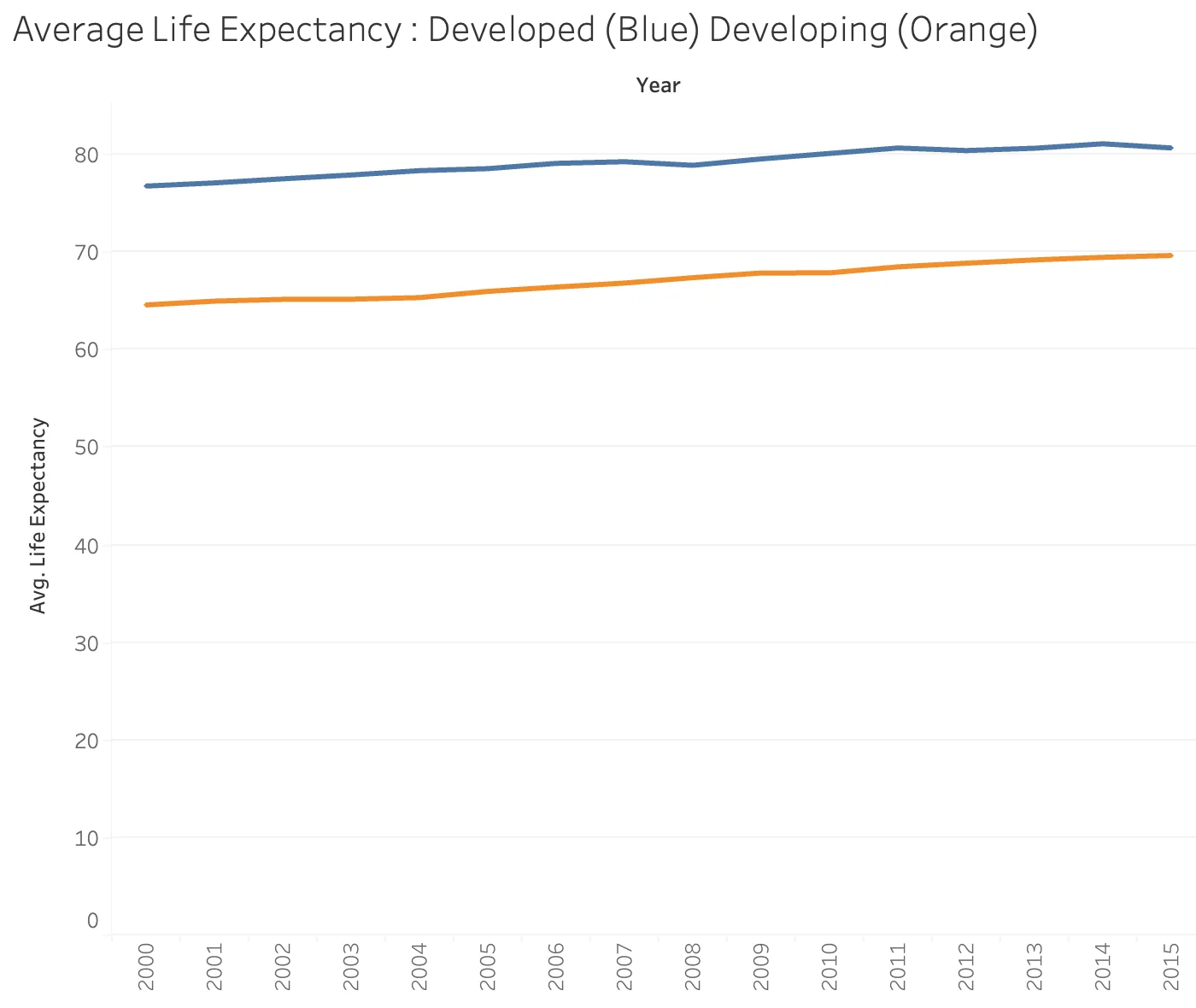
We tested whether socioeconomic factors are significantly related to life expectancy, using country-level data from 2000–2015 split into developed and developing nations. The project moved through descriptive, diagnostic, predictive and prescriptive analysis.
Key results
2,928country-year records (512 developed, 2,416 developing)
0.72correlation between years of schooling and life expectancy
–0.70correlation with adult mortality, the strongest negative driver
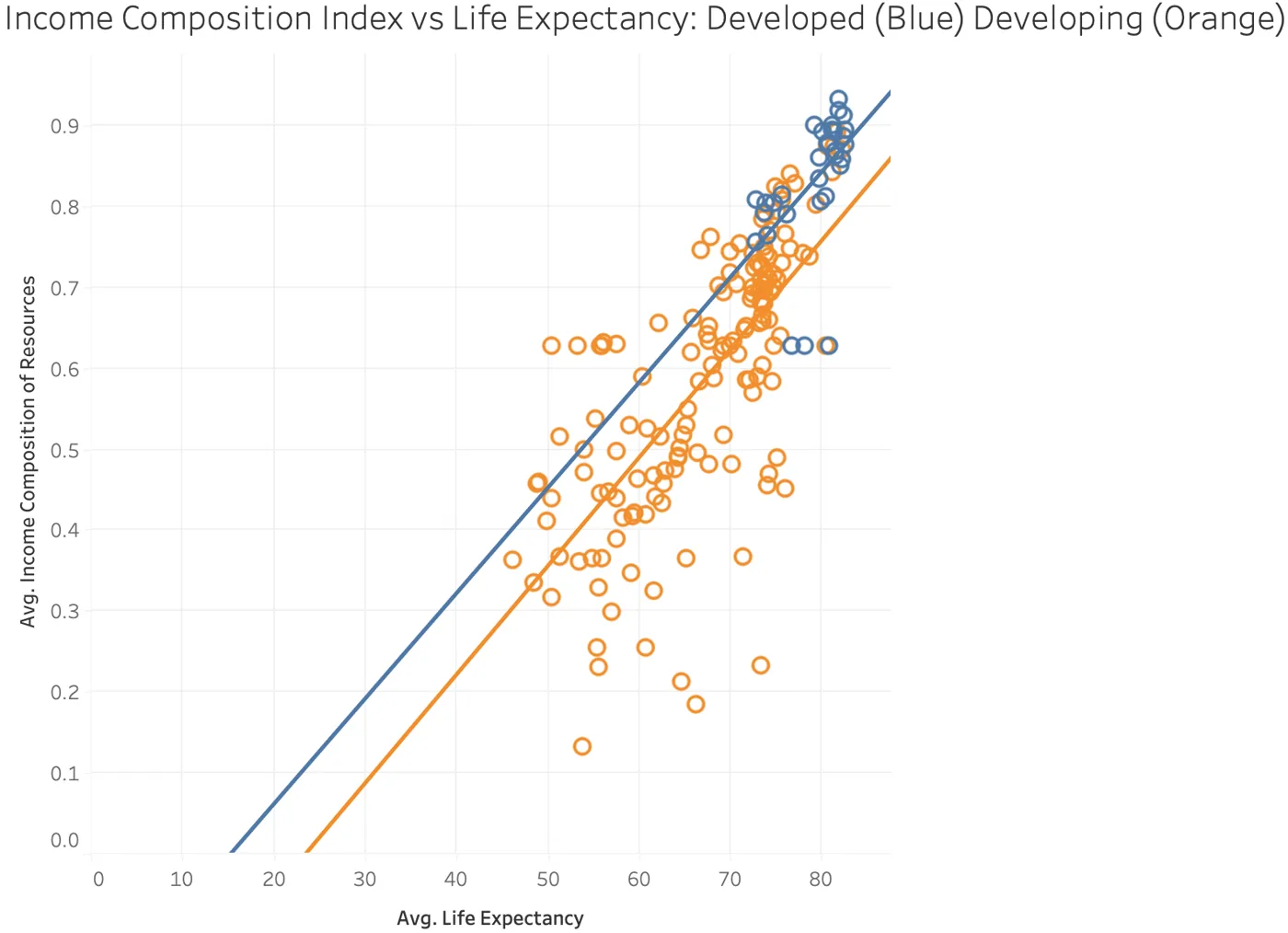
0.69correlation with the income composition of resources index
The question
Is there a significant relationship between life expectancy and social and economic factors such as schooling, income, health spending and immunization?
What I did
- Cleaned the raw data: flagged missing values, filtered countries with a single row, imputed annual averages
- Built correlation heatmaps and kept relationships of 0.30 or higher
- Used box plots and IQR bounds to study outliers in each group
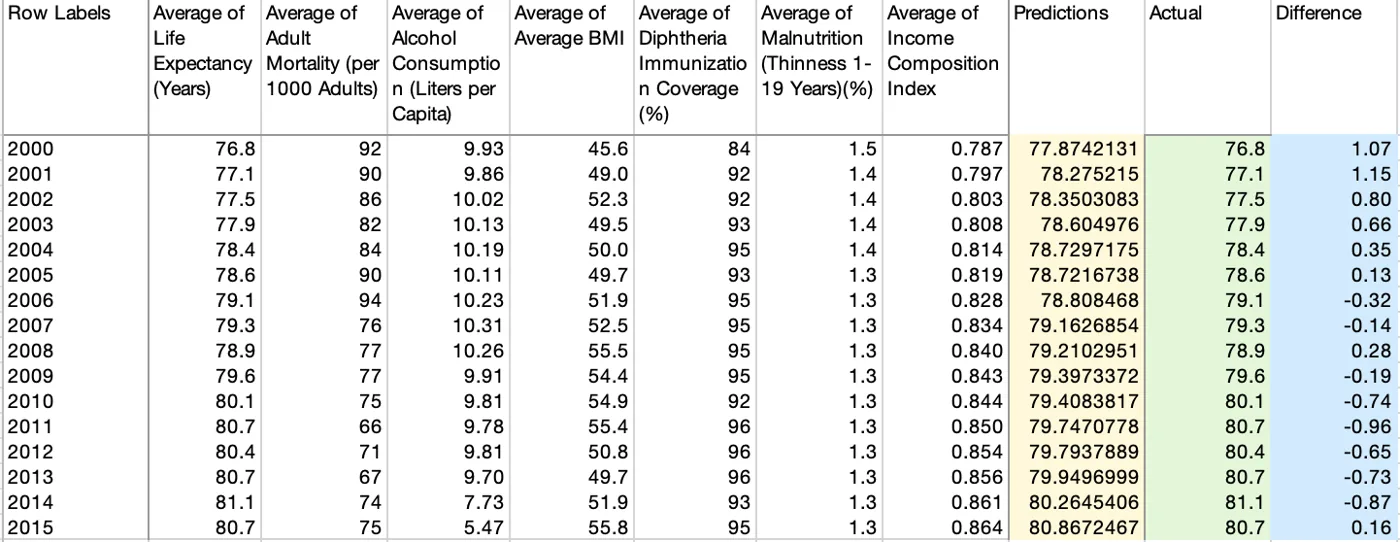
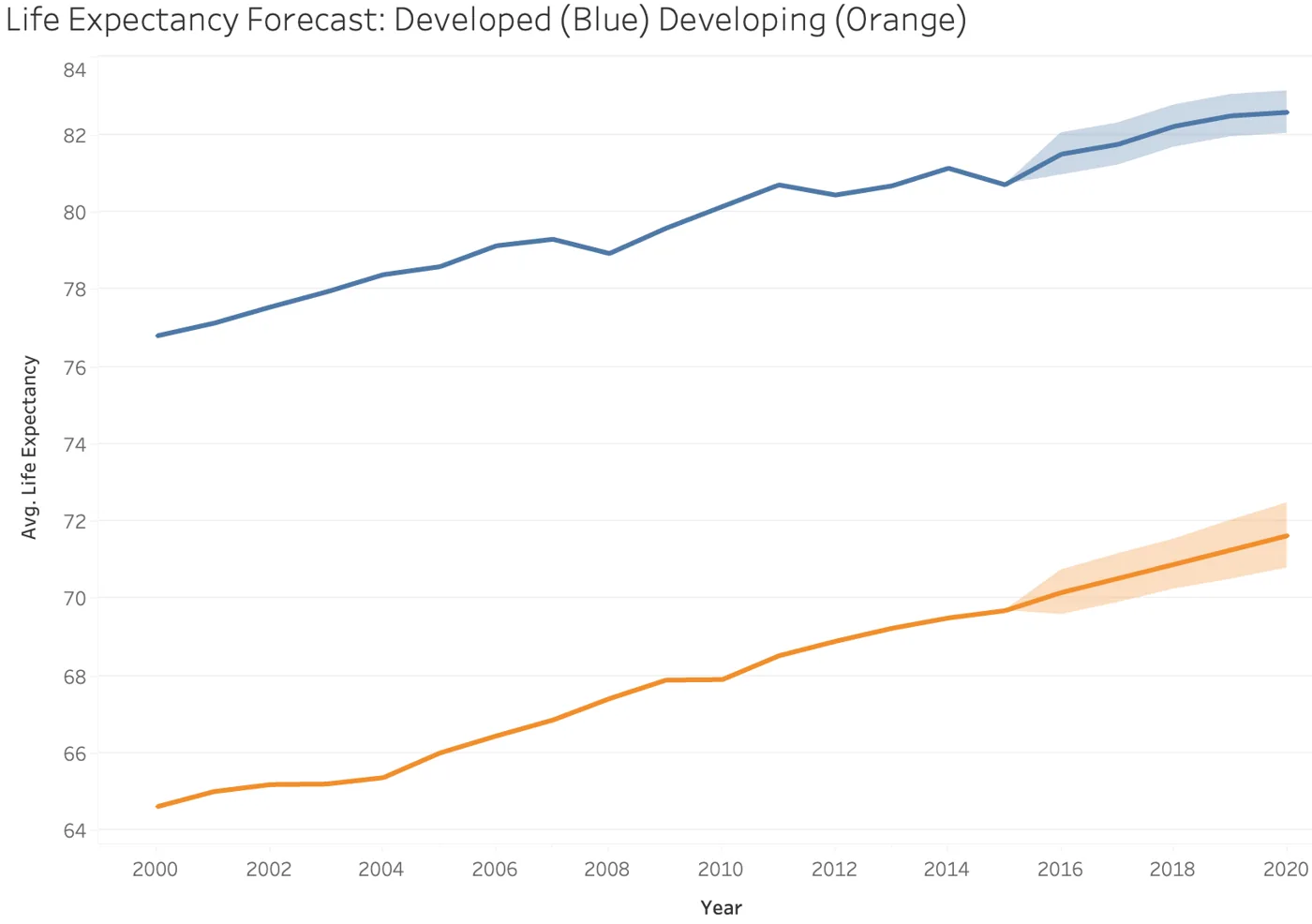
- Ran regressions with and without outliers, then forecast future life expectancy
What I found
We rejected the null hypothesis: education and income composition show the strongest positive links, and adult mortality and HIV/AIDS the strongest negative ones. Removing outliers made the model worse, showing that extreme values were part of the real spread of the data, not noise.
The Code
This project was built in Excel and Tableau rather than code: data cleaning with conditional formatting, correlation matrices, IQR outlier bounds and regression with Excel's Analysis ToolPak, and visuals in Tableau. The results are shown in the charts below.